
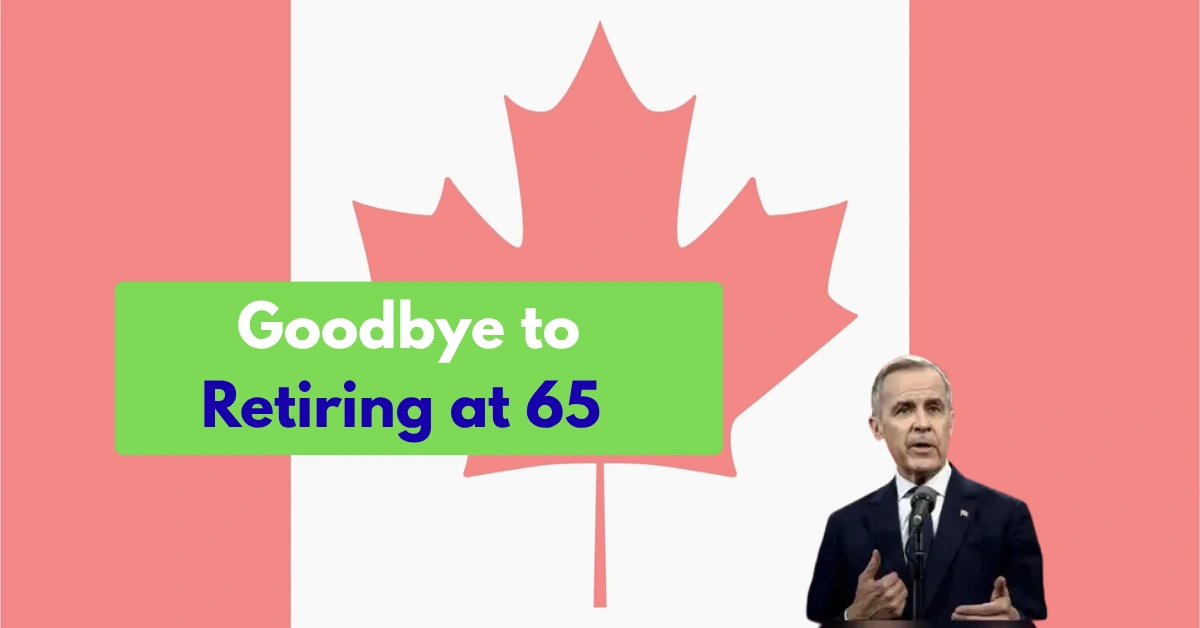
Retirement in Canada is no longer what it used to be. For decades, age 65 was the golden number — the milestone when Canadians could finally step back from work and start collecting their Old Age Security (OAS) and Canada Pension Plan (CPP) benefits. But with the country’s aging population, rising life expectancy, and economic pressures, that traditional retirement age is being redefined.
Let’s break down what’s changing, how it affects your pension income, and what it means for anyone planning to retire in the next few years.
$1,200 Federal Payment for Low-Income Seniors in October 2025: Eligibility, Dates, and Key Details
Working While on CPP in 2025: How Much You Can Earn Without Losing Benefits in Canada
The End of the “Standard 65” Retirement Age
For most of Canadian history, 65 has been considered the standard age for retirement — the point when seniors could count on stable monthly income from OAS and CPP. But the federal government has been reviewing how sustainable that system is as the number of retirees continues to rise faster than working-age Canadians.
According to Statistics Canada, by 2030, more than one in four Canadians will be over 65. This shift puts immense strain on the pension system, prompting ongoing discussions about gradually extending the age threshold for full OAS and CPP benefits.
While OAS can still be taken at 65, there are strong incentives — and soon, possibly stronger policy nudges — to delay retirement until 67 or later.
How CPP and OAS Ages Are Shifting
Here’s what Canadians need to know about the evolving eligibility landscape:
Old Age Security (OAS)
- You can currently start OAS at age 65, but you can delay up to age 70.
- For every month you delay, your payment increases by 0.6%, adding up to a 36% boost if you wait until 70.
- The government is signaling that the “normal” collection age could soon move closer to 67, reflecting international trends (such as in the U.S. and U.K., where pension ages have already risen).
Canada Pension Plan (CPP)
- CPP can be taken as early as 60 or as late as 70.
- Taking it early reduces your benefit by 0.6% per month before 65 — a 36% cut if you start at 60.
- Delaying after 65 increases payments by 0.7% per month, or 42% more if you start at 70.
- Policy analysts expect more incentives for delayed retirement, potentially redefining 67 as the “full CPP age.”
Why the Government Is Encouraging Later Retirement
The move to extend the retirement age isn’t just about sustainability — it’s about economic necessity. Canada’s labor market faces a shortage of skilled workers as baby boomers retire in record numbers. Encouraging older Canadians to stay employed longer helps:
- Support the economy: More experienced workers remain active.
- Reduce pressure on pensions: Fewer early withdrawals mean more long-term stability.
- Increase lifetime benefits: Delayed payments mean higher monthly pensions later in life.
This approach aligns with recommendations from the OECD and other global financial institutions that have urged developed nations to rethink traditional retirement ages.
The Financial Upside of Delaying CPP and OAS
For Canadians planning ahead, the numbers speak for themselves.
If you delay both CPP and OAS until age 70, your total retirement income from government sources could rise by 30%–40% — a significant difference for those living on fixed incomes.
Example:
- A retiree eligible for $800/month in CPP at 65 could receive around $1,136/month if they wait until 70.
- Combined with OAS deferral, the total lifetime payout may be much higher — particularly if you live past 85.
However, this strategy doesn’t fit everyone. If your health is uncertain or if you need income immediately, starting benefits earlier can still make sense.
What It Means for Future Retirees
If you’re under 60, it’s time to rethink your retirement timeline. Many experts predict that by 2030, the default age for full OAS and CPP may shift closer to 67. While no official announcement has been made, government consultations have already hinted at reforms that would align Canada with other advanced economies.
That doesn’t mean benefits will vanish at 65 — but the “full amount” could only be reached by waiting longer, with earlier claimers facing higher reductions.
How to Prepare for the New Retirement Reality
If you’re planning to retire in the next decade, here are a few smart steps:
- Review your CPP statement through your My Service Canada Account (MSCA) to see your projected benefits.
- Estimate your retirement expenses and consider whether deferring payments could cover inflation risks.
- Build private savings through RRSPs, TFSAs, or workplace pensions to reduce reliance on OAS/CPP.
- Plan for healthcare costs, which rise sharply after 65.
- Stay informed — government updates about retirement age adjustments are expected in upcoming federal budgets.
Canada’s retirement system is evolving, and the message is clear: age 65 is no longer the finish line it once was. With longer lifespans, higher costs, and shifting demographics, both OAS and CPP are adapting to a new financial reality — one where working longer means earning more and retiring early could cost thousands in lifetime income.
Whether you choose to retire at 60, 65, or 70, the key is planning ahead. Because the future of retirement in Canada isn’t about one age — it’s about making the right choice for your life, health, and financial stability.