
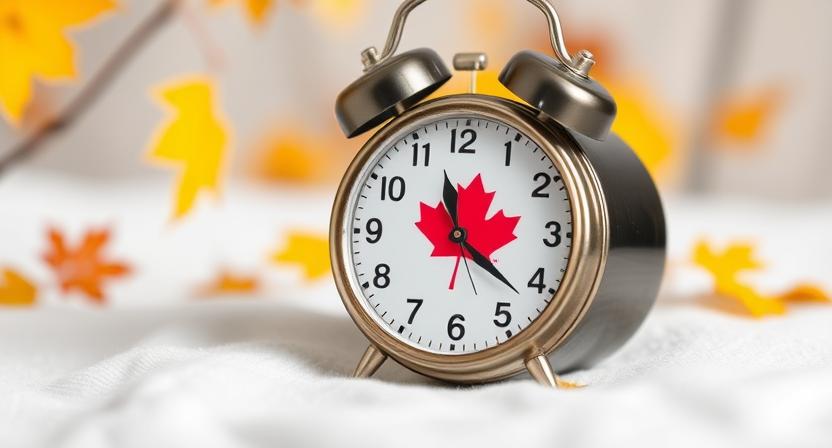
As autumn deepens across Canada, the familiar seasonal shift approaches once again — daylight ending sooner. In 2025, Canadians will once again “fall back” one hour as Daylight Saving Time (DST) comes to an end. While the change may seem routine, it brings a host of effects on health, energy use, and daily life. With growing discussion around whether Canada should permanently end the biannual clock change, 2025 could mark an important moment in how Canadians experience time.
This detailed look explores when the time change happens, why it exists, and how the shorter days ahead will impact communities nationwide.
Daylight Saving Time Ends Earlier Than Usual in Canada 2025: What to Expect Next
When Daylight Saving Time Ends in Canada in 2025
Daylight Saving Time officially ends on Sunday, November 2, 2025, at 2:00 a.m. At that moment, clocks will move back one hour to 1:00 a.m., granting Canadians an extra hour of sleep — and signaling the beginning of darker evenings.
The practice applies to most provinces and territories, including:
- Ontario, Quebec, British Columbia, Alberta, Saskatchewan (partially), Manitoba, and Atlantic provinces.
However, some regions, such as most of Saskatchewan and small parts of British Columbia and Quebec, remain on standard time year-round and do not change their clocks.
After the change, the sun will begin setting noticeably earlier, with many regions seeing darkness arrive before 5:00 p.m. by late November.
Why Daylight Ends Sooner — The Science Behind Shorter Days
The primary reason daylight ends sooner in fall has nothing to do with the clock and everything to do with the Earth’s position around the sun.
As the Northern Hemisphere tilts away from the sun in autumn and winter, sunlight reaches Canada at a lower angle, resulting in shorter daylight hours. This gradual loss of daylight peaks around the winter solstice on December 21, when Canada experiences the shortest day and longest night of the year.
For example:
- In Toronto, daylight drops from nearly 13 hours in September to just 9 hours by December.
- In Calgary, daylight decreases from about 12.5 hours to under 8 hours by late December.
- In Whitehorse, Yukon, the sun barely rises above the horizon for less than 6 hours a day during midwinter.
This shift affects everything from energy consumption to mental well-being.
The Origins of Daylight Saving Time in Canada
Daylight Saving Time was first introduced in Canada over a century ago to make better use of daylight during the longer summer months. The idea was to shift an hour of daylight from the morning to the evening, reducing energy consumption and providing more usable daylight for work and recreation.
The system became widely adopted during the First World War and has remained part of Canadian timekeeping ever since. However, modern energy studies have questioned its efficiency, and many countries — including some parts of the U.S. — have debated whether to end it altogether.
In 2025, several Canadian provinces are again revisiting discussions about staying on permanent daylight or standard time, following similar moves in parts of the United States.
How Shorter Days Affect Canadians
The end of daylight saving time has a range of impacts, both positive and negative.
1. Sleep and Health
While most people enjoy an extra hour of sleep when clocks go back, the adjustment can disrupt sleep schedules. Research shows that even minor changes in circadian rhythm — the body’s internal clock — can cause short-term fatigue and mood fluctuations.
2. Seasonal Affective Disorder (SAD)
With darkness falling earlier, many Canadians experience Seasonal Affective Disorder, a type of depression linked to reduced sunlight exposure. Symptoms often include low energy, irritability, and difficulty concentrating. Experts recommend increasing exposure to natural light, maintaining physical activity, and using light therapy to combat the effects.
3. Road Safety Concerns
Statistics show that road accidents tend to increase immediately after the time change, as drivers and pedestrians adjust to darker conditions during evening commutes. Police services and transportation agencies across Canada typically issue reminders for extra caution during this period.
4. Economic and Lifestyle Adjustments
Shorter daylight hours can affect consumer behavior, reducing evening shopping and outdoor activities. Conversely, it can boost indoor entertainment and energy use, as Canadians spend more time inside.
The Push to End Clock Changes in Canada
Public debate over the future of Daylight Saving Time has intensified in recent years. Many Canadians — and several provincial governments — have voiced support for ending the twice-yearly clock change.
Recent developments include:
- British Columbia passed legislation to move to permanent Daylight Time, pending U.S. state alignment in nearby regions such as Washington and Oregon.
- Ontario also passed a bill in 2020 to adopt permanent Daylight Time, contingent on Quebec and New York agreeing to similar measures.
- Alberta held a 2021 referendum where a majority voted to keep switching clocks, though public opinion continues to evolve.
As of 2025, no nationwide decision has been implemented, meaning Canadians will continue to change their clocks in March and November. However, the conversation remains active, and future reforms are still possible.
How to Prepare for the Time Change
Though it’s only a one-hour shift, the end of Daylight Saving Time can affect routines, sleep, and productivity. Here are some practical steps Canadians can take to ease the transition:
- Adjust your schedule gradually – Go to bed 15–20 minutes earlier for a few nights before the change.
- Get morning sunlight exposure – Spend time outdoors early in the day to help reset your internal clock.
- Be cautious on the roads – Reduced evening visibility can make commuting riskier.
- Check home devices – Update clocks on stoves, microwaves, and vehicles that don’t adjust automatically.
- Plan for mood changes – Use light therapy lamps or take midday walks to counter shorter days.
These small habits can make the seasonal shift easier and healthier.
Regional Differences Across Canada
Canada’s vast geography means the impact of shorter days varies widely:
- Atlantic Canada experiences early sunsets as soon as 4:00 p.m. by late November.
- Ontario and Quebec typically see darkness around 4:30–5:00 p.m. in major cities like Toronto and Montreal.
- Western provinces like Alberta and British Columbia have slightly later sunsets but longer morning darkness.
- Northern territories experience the most extreme daylight changes, with some regions near the Arctic Circle enduring near-total darkness for weeks.
This diversity adds to the challenge of adopting a unified national approach to daylight saving reform.
Looking Ahead: The Future of Time in Canada
While daylight ending sooner in Canada 2025 is a familiar ritual, it’s part of a broader conversation about how society balances health, productivity, and natural rhythms. The debate over Daylight Saving Time reflects growing awareness of how even small time shifts affect modern life.
Whether Canada eventually chooses permanent daylight time or standard time, it’s clear that the seasonal time change will remain a major topic of national discussion. For now, Canadians can prepare to embrace earlier sunsets, cozy evenings, and the gradual march toward winter.
Daylight ending sooner in Canada 2025 marks more than just a clock change — it’s a reminder of how interconnected our daily lives are with nature’s rhythms. As the country adjusts to darker days, conversations about energy, health, and timekeeping continue to evolve.
Whether you love the extra hour of sleep or dread the early sunsets, one thing is certain: as clocks fall back, Canadians from coast to coast will once again feel the unmistakable shift that signals the true arrival of winter.